

Short beam shear test--Test method (taking the common short beam shear fixture as an example)
2025-10-31 16:18:18Short beam shear test test method (taking the common short beam shear fixture as an example)
1. Test preparation
1.Sample requirements
The length, width, and thickness of the sample must be processed in strict accordance with relevant standards (such as ASTM D2344, GB/T 3856, etc.) to ensure that the dimensional tolerance is within the allowable range, otherwise the accuracy of the test results will be affected.The surface of the sample should be smooth and free of scratches, cracks, bubbles and other defects to avoid early damage due to stress concentration during the test, resulting in distortion of the test results.
2.Equipment inspection
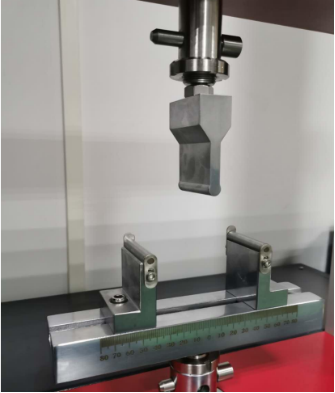
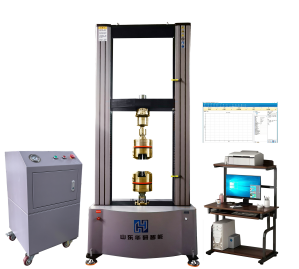
Confirm that the universal testing machine (Shandong Huayan composite testing machine in the picture below) is operating normally, the force value and displacement sensor calibration are valid; the short beam shear fixture is installed firmly, and the components are not worn or deformed.
2. Test steps
1.Place the sample on the two supports of the fixture, ensuring that the axis of the sample is parallel to the axis of the supports, that the width direction of the sample is in uniform contact with the supports, and that there is no unbalanced load.
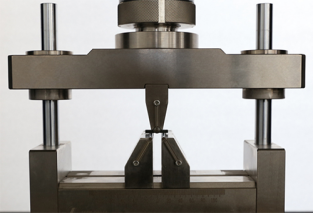
2.Set the test speed and test mode in the testing machine control system, and set the measurement accuracy of force value and displacement.
3.Check the contact status between the specimen and the fixture and whether the testing machine is running smoothly. If there are any abnormalities, make timely adjustments.
4.Start the testing machine and load the indenter onto the sample at a set speed until shear failure occurs on the sample, and record the force-displacement curve during the loading process.
5.After the test, take out the damaged specimen and clean the fixture.
3. Data processing and result analysis
Analyze the force-displacement curve and determine the validity of the test results based on the failure mode of the sample (such as whether the shear surface meets expectations and whether there are other failure modes); if the failure position of the sample deviates from the shear zone (such as breaking at the support), the test results are invalid and need to be retested.
Four.Things to note
Short beam shear tests of different materials (such as composite materials, metals, plastics, etc.) must follow the corresponding industry standards (for example, composite materials refer to ASTM D2344) to ensure that the sample size, loading rate, fixture form, etc. meet the standard requirements.