


Matching process of composite compression fixture (ASTM D6641) and universal testing machine
2025-10-11 16:54:54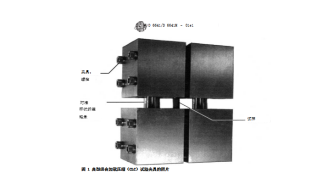
In composite material compression performance testing, the combined load compression (CLC) fixture under the ASTM D6641 standard is a key tool to ensure accurate data.As a manufacturer deeply engaged in the research, development and production of universal testing machines, today, we will take practical operation as the core and take you step by step to master the operation method of this equipment, so that you can do everything from clamping to data collection with ease.
01
Introduction to ASTM D6641 Fixtures
The combined load compression (CLC) solution proposed by the ASTM D6641 standard uses a combination of "end loading + shear loading" to allow stress to be transmitted to the specimen more evenly, greatly improving data accuracy.The core advantage of this fixture is that it can be adapted to our universal testing machine to achieve accurate testing of key properties such as compressive strength, stiffness, Poisson's ratio, etc. It especially solves the pain points of traditional fixtures such as "samples are prone to premature crushing and data repeatability is poor."


(The above figure quotes "Standard Test Method for Determining the Compression Properties of Polymer Matrix Composite Laminates Using Combined Loading"
Note - In December 2001, the number D 6641/D 6641M was edited to be a double standard.)
02
Operation Guide: Cooperation steps between ASTM D6641 fixture and universal testing machine

1Before the experiment: Be prepared to avoid data bias
According to the ASTM D6641 standard, the sample must be a "rectangular cross-section straight-edge sample without unreinforced ends" - the effective gauge length (unsupported gage length) is recommended to be 12-25mm (the gauge length needs to be adjusted based on the thickness of the sample).
When installing the clamp, first fix the CLC clamp between the upper and lower flat plates of our universal testing machine, and ensure that the clamp is coaxial with the loading axis of the testing machine through the "positioning rod + linear bearing" that comes with the clamp (as shown below).

This step is the key to avoid "extra bending stress". In addition, our testing machine has a calibration function that can be monitored and adjusted without repeated debugging.
Place the sample into the sample slot of the fixture and tighten the screws with a torque wrench to ensure uniform clamping force.If strain needs to be measured, strain gauges can be pasted on the gauge length section of the specimen.
2During the test: parameter setting and data collection of the universal testing machine
After starting our universal testing machine, you need to set the parameters according to the following steps, and the testing machine will automatically complete the loading and data recording: 1. Select "Compression Test Mode" (our testing machine is preset with this standard program); 2. Set the loading rate; 3. Start the test: The testing machine applies a compression load to the CLC clamp through the flat plate, and the clamp simultaneously transfers the "end + shear" combined load to the specimen; 4.Data collection: The testing machine records the "load-strain" curve in real time until the specimen fails.

3After test: Fixture maintenance and data review
After the test, you only need to loosen the clamp bolts to take out the sample, and use a dry cloth to clean the sample slot and bearing of the clamp; in terms of data, the original curve and calculation results can be exported through the testing machine software. If abnormal data (such as too low strength) is found, it can be reviewed with the strain gauge data.

03
Scope of application
This combination of ASTM D6641 fixture and universal testing machine is especially suitable for the following scenarios:
01Material R&D and production: For example, when it comes to carbon fiber composite materials for aerospace and glass fiber composite materials for automobiles, this solution can be used to obtain accurate compression performance data; in the production process, it can be used as a quality inspection tool for batch products - our universal testing machine supports "continuous testing of multiple groups of specimens", and the fast fixture installation can greatly improve the detection efficiency and prevent unqualified products from flowing downstream.
02Industry standard testing: meeting compliance requirements Industries such as aerospace and rail transit that have extremely high requirements on material performance often use ASTM D6641 as the designated standard for compression performance testing.The combination of our universal testing machine and CLC fixture fully complies with the loading method and data collection requirements of the standard. It can provide companies with "compliance" test reports and help products pass industry certification.
03Special needs: The modulus and Poisson's ratio test of unidirectional composite materials can be used with our testing machine to accurately obtain the compression modulus and Poisson's ratio - this is crucial for studying the "stiffness characteristics" of unidirectional composite materials (such as structural deformation calculation), and fills the testing gap of traditional fixtures.
The combination of ASTM D6641 combined load compression fixture and universal testing machine is an "efficient solution" to solve the compression performance testing of polymer matrix composite laminates - it not only complies with international standards, but also takes into account operational convenience and data reliability.