



Analysis of the influence of KRL test on polymer additives in lubricating oils
2025-06-23 22:53:531. The core mechanism of action of KRL test
The KRL test (CEC L-45-A-99 standard) evaluates the shear stability of polymer additives in lubricating oils (such as viscosity index improvers VIIs, anti-wear agents) by simulating high shear stress environments (such as gearboxes, hydraulic systems).
Its core influence mechanism is as follows:
1. Mechanical shear degradation: - During the test, the tapered roller bearing produced a shear rate of up to 10⁶~10⁷ s⁻¹ at a rotation speed of 1500rpm and a load of 5000N, causing the long chain molecules of the polymer to break (molecular weight reduction). For example, after the molecular chain of polymethacrylate (PMA) Class VIIs breaks, the viscosity index (VI) of the lubricating oil decreases significantly.
2. Quantification of viscosity loss: - Calculate the viscosity loss rate by measuring the kinematic viscosity change of the lubricating oil before and after the test (ASTM D445 standard).Typical requirements: The viscosity loss rate of hydraulic oil needs to be ≤15% (SH/T 0845 standard)
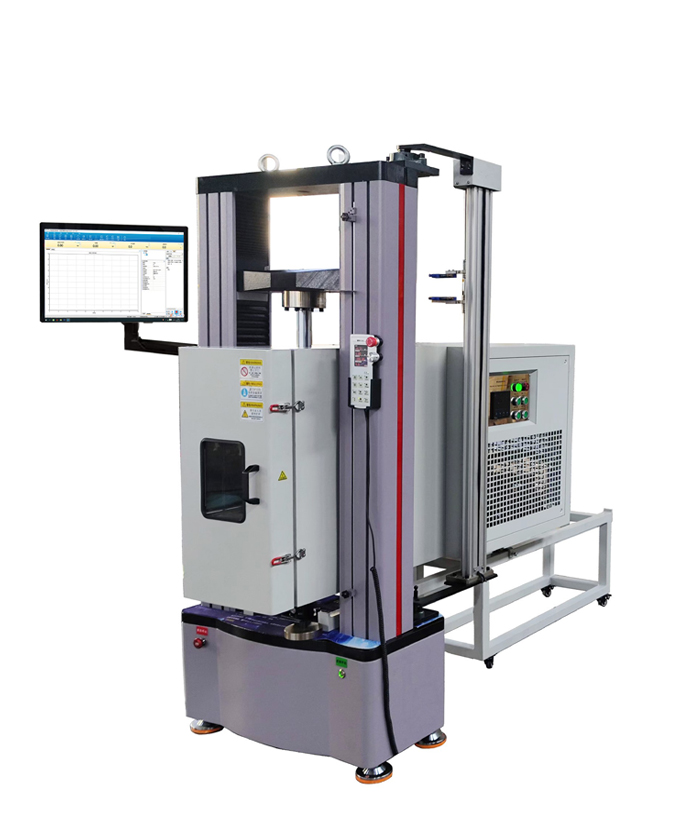
2. Specific impact on the performance of polymer additives
1. Viscosity index improvers (VIIs): - The molecular weight of shear-sensitive polymers (such as polyisobutylene OCP) decreases by 30% to 50% in the KRL test, resulting in a decrease in high temperature and high shear (HTHS) viscosity and affecting the oil film thickness.Stable polymers (such as star-shaped PMA) have stronger shear resistance due to their branched structures, and their viscosity loss rate can be controlled within 8%.
2. Anti-wear/anti-friction additives: - The adsorption film of some polymer additives (such as polyether ester) is destroyed under high shear, causing the friction coefficient to increase (for example, from 0.08 to 0.12).However, composite polymers containing nanoparticles (such as Zr-MOFs) can maintain low wear rates (wear volume reduction ≥90%) due to the "rolling bearing effect"
3. Dispersants and pour point depressants: - Shear degradation may weaken the ability of the dispersant to suspend soot, resulting in an increased risk of sludge formation.
3. Application significance and improvement directions
1. Additive formulation screening: KRL test is a key means to screen high-stability VIIs.For example, a certain PAO-based fully synthetic oil reduced its viscosity loss rate from 18% to 7% by switching to hydrogenated styrene-isoprene copolymer (HSD).
2. Lubricating oil life prediction: Test data can be associated with the oil aging model under actual working conditions.For example, a certain wind power gear oil has a loss rate of ≤10% tested by KRL, which corresponds to an actual service life of more than 5 years.
3. Development of new additives: Based on KRL test results, the development of shear-stable polymers (such as hyperbranched structures, nanocomposite additives) has become a trend.For example, graphene-modified PMA additives have a viscosity loss rate of only 5% and a reduced friction coefficient.
4. Industry standards and testing recommendations
1. Core standard: CEC L-45-A-99: stipulates the rotation speed, load and temperature parameters of KRL test.ASTM D6278: Supplementary method for shear stability testing.
2. Test optimization suggestions: Gradient loading: gradually increase the load (500N→5000N) and observe the degradation threshold under different shear strengths.Multi-temperature testing: Compare results at 40°C (normal) and 100°C (extreme) to evaluate temperature-shear coupling effects.
The KRL test directly reflects the shear resistance and functional durability of polymer additives in lubricants by simulating extreme shear environments. It is a core evaluation method for optimizing the molecular design of additives and improving oil performance.In the future, molecular dynamics simulations and experimental data need to be combined to develop smart polymer systems with higher stability.